mouse_links module — click a file path → $EDITOR <path>
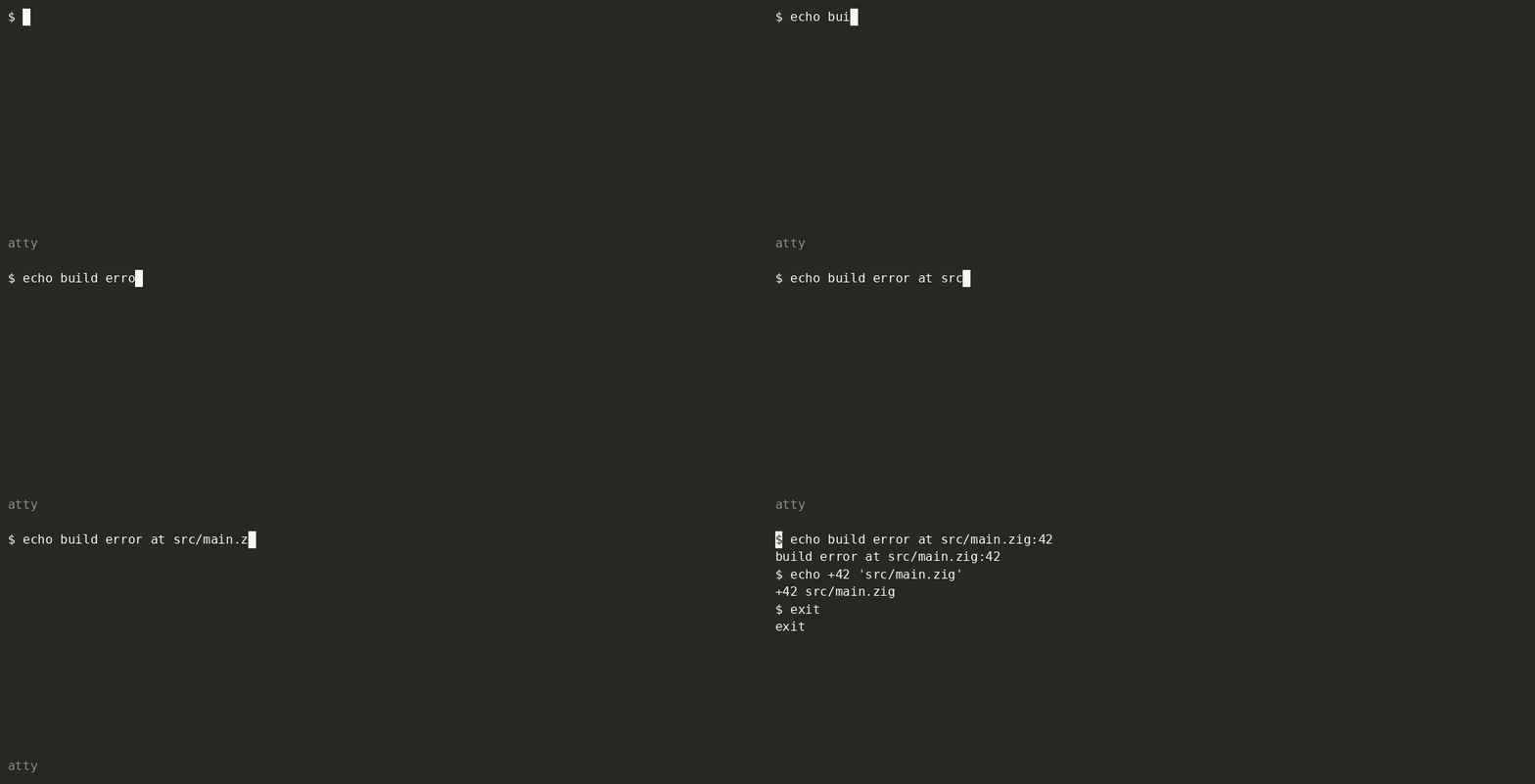
Wires a left-click on a path token in compiler / grep / ls output to a $EDITOR +LINE 'path'\n injection into the shell’s input stream. Captures terminal output into a per-module ring (SGR + OSC stripped), maps screen (row, col) → captured row via a monotonic write counter, and uses the pure path detector at src/modules/mouse_links/path_detect.zig.
Detected path shapes:
:LINEand:LINE:COLsuffixes (compiler-error format)~/,./,../prefixes- Quoted paths with internal spaces (
"src/with space/x.md":5) - Bracket wrappers (matched
( [ < {) - Common compiler punctuation (
,,.,;,:after the path) - Known bare filenames (
Makefile,README.md,Cargo.toml, etc.)
Trust posture
$EDITOR is trusted: the shell tokenises the injection so EDITOR="code --wait" works while EDITOR="vim ; rm -rf" is the user’s footgun. Streaming-line capture only — TUIs like vim / htop run in the alt-screen where atty’s mouse intercept is gated off (the shell owns input).
Configuration
Requires mouse.enabled = true in the user’s config to pull the proxy’s SGR-1006 click stream:
pub const mouse: atty.Mouse = .{ .enabled = true };

pub const modules = .{
    atty.modules.mouse_links.configure(.{}),
    atty.modules.guardrail.configure(.{}),
    atty.modules.history.configure(.{}),
};
See also
mouse_urls— sibling for URL clicks- Writing a module — framework docs
- Source:
src/modules/mouse_links/